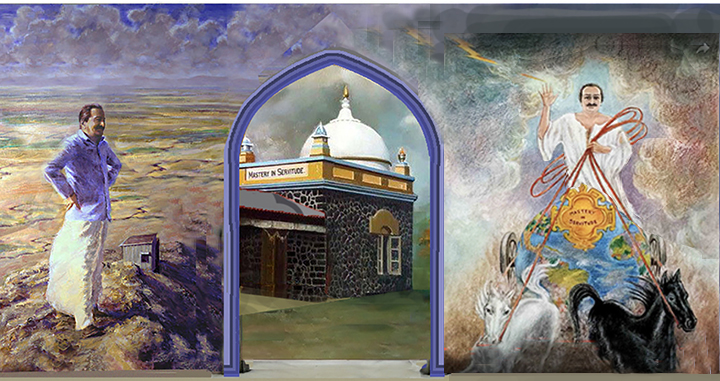
Avatar in India
THE REAL MEANING OF RELIGION IS
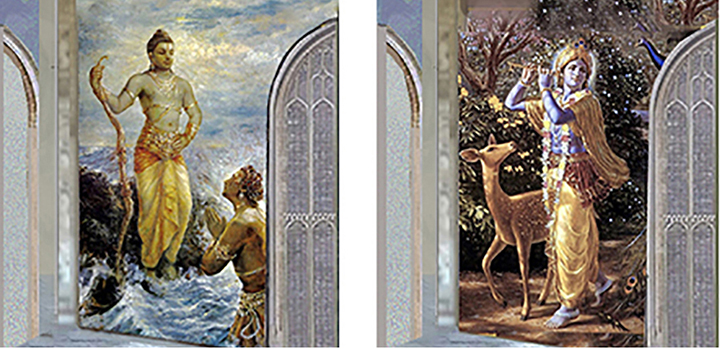
Rama and Krishna
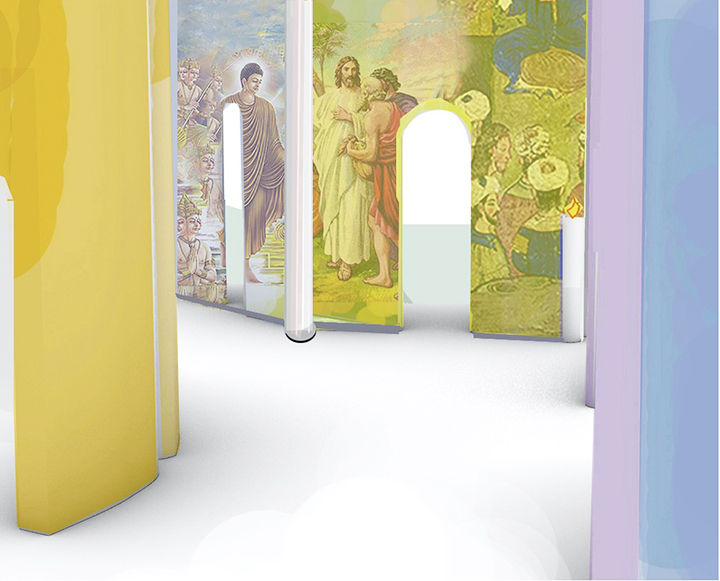
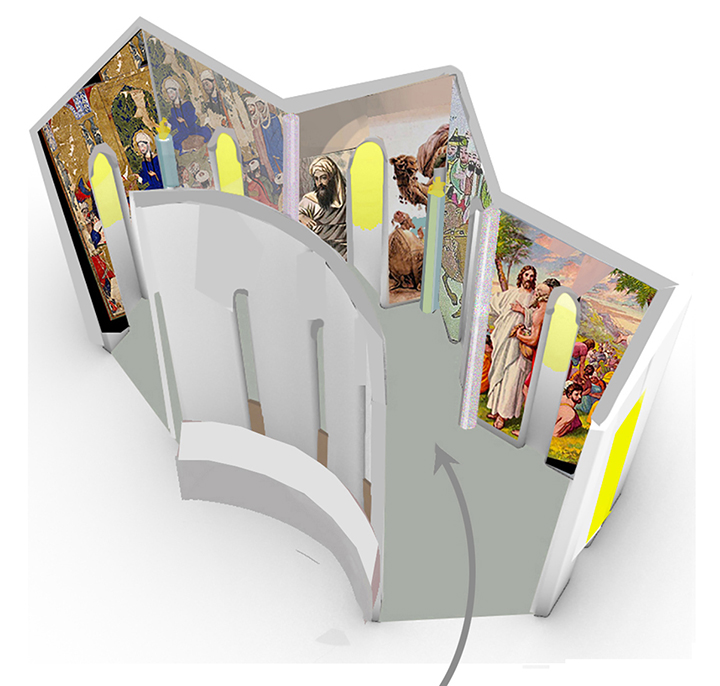
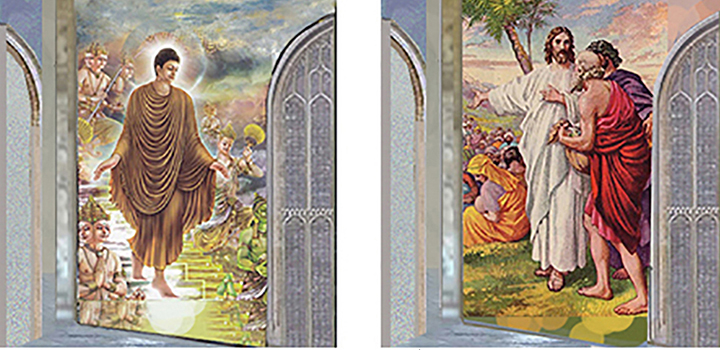
Buddha and Jesus plus Zoroaster and Mohammad Continue to the SITE PLAN FLOOR __________________________________________________ History of an octagonal structure: The uniqueness of Taj Mahal lies in some truly remarkable innovations carried out by the horticulture planners and architects of Shah Jahan. One such genius planning is the placing of tomb at one end of the quadripartite garden rather than in the exact centre, which added rich depth and perspective to the distant view of the monument. It is also, one of the best examples of raised tomb variety. The tomb is further raised on a square platform with the four sides of the octagonal base of the minarets extended beyond the square at the corners. The top of the platform is reached through a lateral flight of steps provided in the centre of the southern side. The ground plan of the Taj Mahal is in perfect balance of composition, the octagonal tomb chamber in the centre, encompassed by the portal halls and the four corner rooms. The plan is repeated on the upper floor. The exterior of the tomb is square in plan, with chamfered corners. The large double storied domed chamber, which houses the cenotaphs of Mumtaz Mahal and Shah Jahan, is a perfect octagon in plan. The exquisite octagonal marble lattice screen encircling both cenotaphs is a piece of superb workmanship. ________________________________________________ Information about Meher Baba: avatarmeherbabatrust.org |
Info about Meher Baba: https://avatarmeherbabatrust.org/
• EXTERIOR
|
• |
• |
|
• |
|
• |
• |
• |
• |
| • | • |