Gautama Buddha in India
|
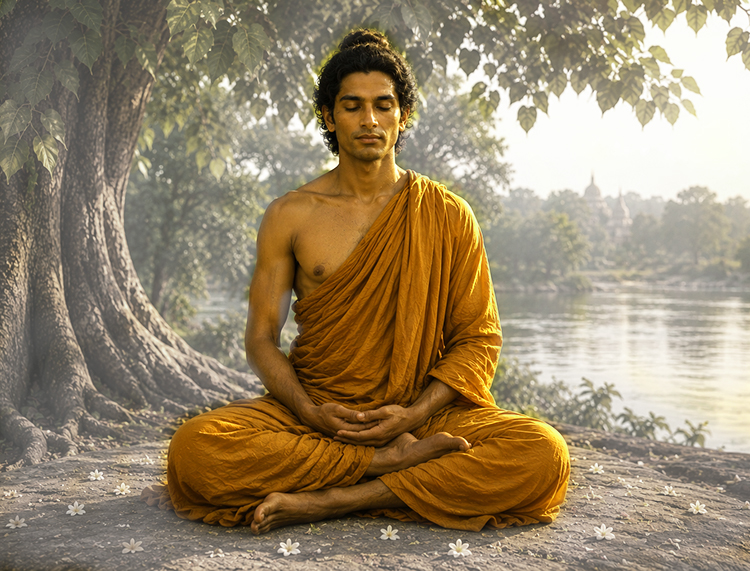
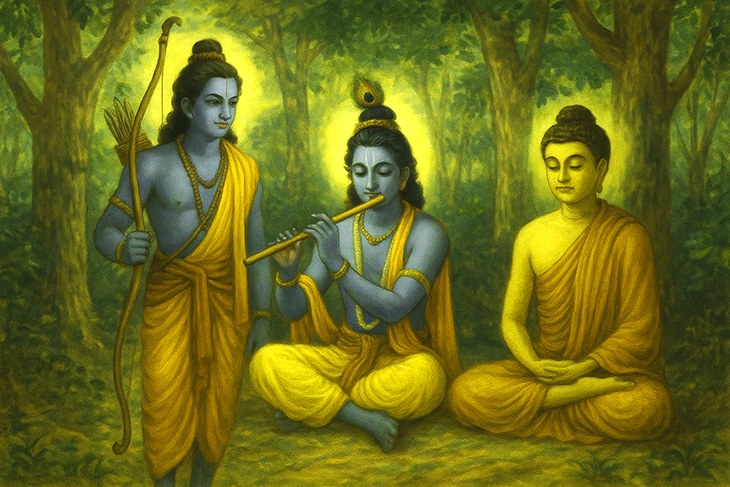
Avatar Buddha Advents in India: Buddha (650 BCE), By the time Siddhartha Gautama was born in northern India around the 5th century BCE, the Aryan immigrants had already blended for many centuries with the older populations of India. Sanskrit and Vedic traditions were dominant in the north. Kingdoms and cities had grown along the Ganges River This was a time of intense spiritual searching. Many people questioned ritual sacrifice and sought liberation from suffering. From this atmosphere emerged the Buddha. RAMA KRISHNA BUDDHA.
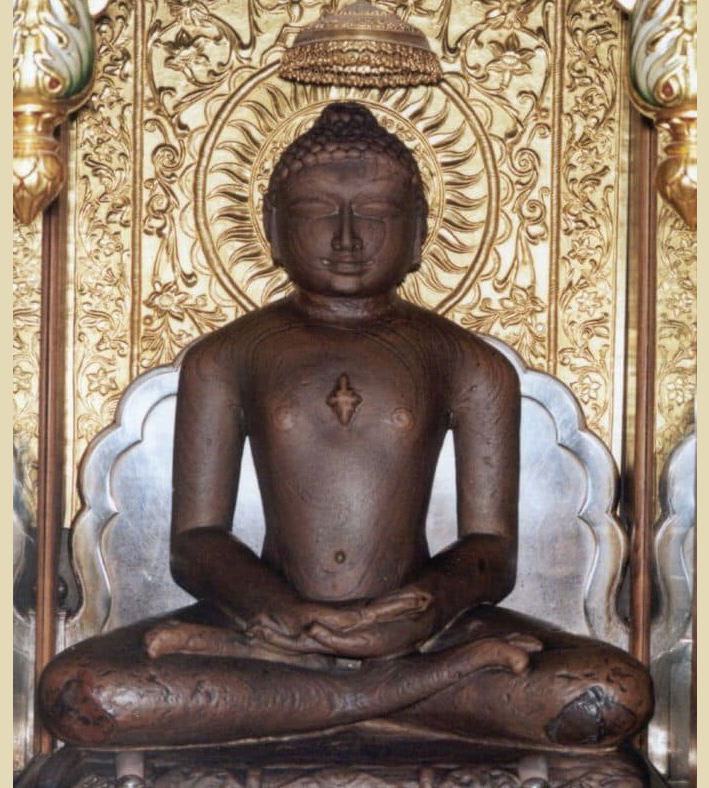
The Avatar, when Buddha, turned humanity inward, revealing the peace that arises when desire is stilled. SARNATH: LORD BUDDHA SEAT The story of Buddha. 650 BC . Sarnath remained abandoned until 1834 when Alexader Cunningham excavated the site.
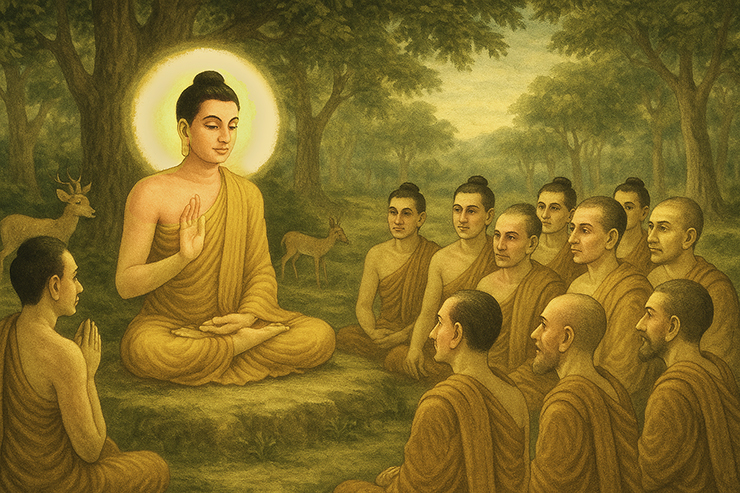
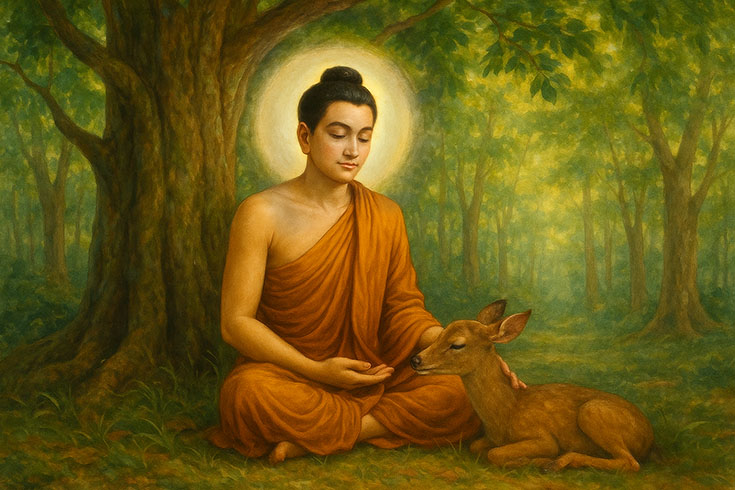
Buddha founded Buddhism here around 700 BC. He gave his first sermon, "The Setting in Motion of the Wheel of Dharma", at Sarnath, near Varanasi. Sarnath means 'Lord of the Deer'. During the time of Gautama Buddha, Varanasi was part of the Kingdom of Kashi. Buddha (Siddhartha Gautama) preached that desire was the root cause of suffering and that people should seek to eliminate desire.
Lord Buddha in his Deer Park "Selfless service and love are twin divine qualities. Only the one who loves can serve. Serve your beloved God and you are serving your own Self in every other self." The Buddha’s First Discourse
Buddha's 'enlightenment' under a Bodi Tree was in Ceylon (Sri Lanka). Lord Buddha then set out to find his five former companions. He traveled back up north through India and united with them in Isipatana, later known as the Deer Park, near Sarnath, just outside Varanasi (Kashi or Benares). The Deer Park at Sarnath, near Varanasi, is traditionally said to have been set aside for the Buddha by a local ruler, often associated with King Bimbisara of Magadha. Visit the Tree of Enlightenment in Anuradhapura Lord Buddha was born in Lumbini and married a princess. They had a son. Buddha was awakened to his God conscious state sitting under a Bodhi tree in Ceylon (Sri Lanka). He walked from Sri Lanka to Sarnath in northern India. The Buddha said he had woken up to the truths of existence and that he was a fully enlightened one, he was fully awakened.
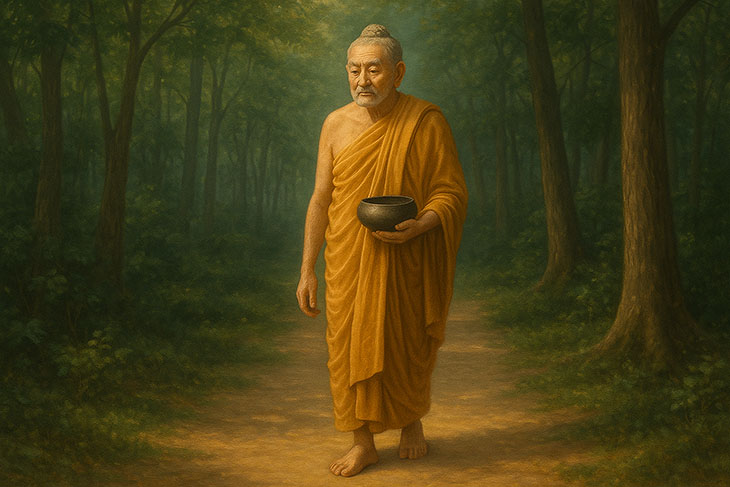
The Buddha seated 650 BC Buddha established his ashram in Sarnath. He had many disciples who later traveled the world and established Buddhism in many Eastern countries. His female disciples were called nuns, who lived separately from the men. Sarnath is the place of Buddha, though many other places consider themselves important. Video: Jim Meyers 'Names of Love" NAMES OF LOVE Video: Mah?parinibb?na Sutta Buddha After Sarnath After turning the Wheel of Dharma in the Deer Park at Sarnath—where he taught the Four Noble Truths and the Eightfold Path to his first five disciples—Gautama, now the Buddha, set forth on a lifelong journey to share the way out of suffering. Buddhas movement after he returned to Sarnath. He spent the next 45 years walking across modern-day Bihar and Uttar Pradesh to teach and establish the Sangha (monastic order).
After his first sermon, he converted the five ascetics who had previously traveled with him. He then gained local followers, including a wealthy merchant named Yasa and quickly amassed sixty disciples. He sent them out in all directions to teach the Dharma, instructing them to spread the message for the good of the many. -----------------------------------------
He did not preach a religion but offered a method: ethical living, mindfulness, and insight into the nature of suffering, impermanence, and the illusion of self. Many who heard him left their homes to follow him, men and women, princes and laborers. The Sangha, the community of monks and nuns, was born. He returned to Kapilavastu, his homeland, where his father, King Suddhodana, still grieved his departure. His wife Yasodhara and son Rahula joined the Sangha in time, renouncing palace life for the search for truth. He spent the rainy seasons (the vassa) in monasteries or under trees, teaching and meditating. Kings such as Bimbisara and later Ajatashatru of Magadha, and the merchant Anathapindika, became patrons, building monasteries like Jetavana and Veluvana for the growing community.
The Buddha often withdrew into solitude. In forests and caves, he often stayed in seclusion. Though his teachings spread, he remained a wanderer, never claiming a permanent home. As the years passed, his body aged but his mind remained luminous. When he was around 80, he fell ill after a meal in Kushinagar. Knowing his time had come, he lay between two sal trees. More Buddha: SARNATH --------------------------------------------- --------------------------------------------- Buddhas' disciples inherited different aspects of his personality and approach. There was no difference in the core but there was an immediate and obvious difference in their focus and how stricktly they interpreted the rules. This led to a famous clash of perspectives right after his death, primarily between Strict Asceticism vs. Compassion for the Masses. .. 'Mahakasyapa' assumed leadership of the monastic community following the (death) of the Buddha, presiding over the First Buddhist Council..... 'Ananda's role in founding the (nun) order made him popular with the bhiksunis. 'Ananda' often taught them, often encouraged women to ordain. Ananda's pro-bhiksuni attitude may well be the reason why there was frequent dispute between 'Ananda' and 'Mahakasyapa'. While Buddhism thrived in India for centuries, it was eventually wiped out or absorbed by re-emerging Hinduism and later Islamic invasions by the 12th century . However, it found a permanent, prolonged home in Sri Lanka --------------------------------- Buddhism was most prevalent In Srinagar and Kashmir
from the 3rd century BCE to the 2nd century CE, spanning the golden ages of the Mauryan and Kushan Empires. During this roughly 500-year window, Srinagar transitioned from a newly founded city into one of the most prominent hubs of international Buddhist scholarship.
The original city of Srinagar was founded by Emperor Ashoka around 240 BCE specifically as a stronghold of Buddhism. Ashoka built 500 monasteries (sangharamas ) and numerous stupas across the Kashmir Valley. He brought 500 arhats (enlightened monks) to establish a permanent seat of learning. Srinagar and the greater Kashmir area reached its absolute peak as a powerhouse of intellectual Buddhism. Srinagar became the global heartland for the Sarvastivada school. They uniquely abandoned local dialects and translated the Buddhist canon entirely into Sanskrit, making it highly accessible to international scholars.
------------------------------------------------
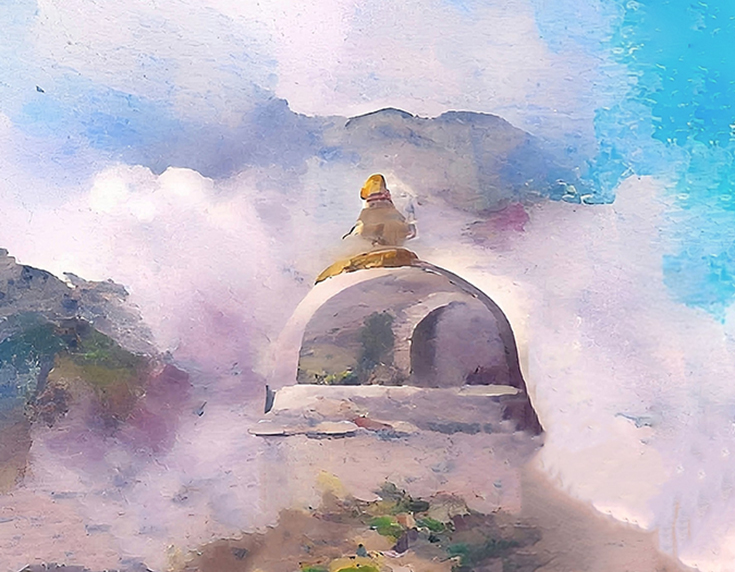
------------------------------------------------ At Sarnath now are his ruins, stupa and museum. In Sarnath every country has now built their own structures that represent their school of Buddhism. Among the several temples, monasteries and structures, Thai Temple is the most famous place of worship for the Thai Buddhists. There are also Tibetan, Chinese, Japanese temples, and more. More Buddha SARNATH
Video: Sarnath Attractions: Sarnath attractions to visit HOW TO VISIT: Sarnath is a mere 10 Km from Varanasi. There are flights from Delhi and elsewhere to Varanasi. You can drive from Lucknow, a 4+ hour drive. Trains arrive from all over India. There are fine hotels in Sarnath and many hotels in Varanasi, by the ghats overlooking the River Ganges. --------------------------------------------- Start you India Pilgrimage: INDIA PILGRIMAGE Story of Meher Baba STORY MEHER BABA Return to AVATARS page AVATAR IN INDIA Return to KRISHNA page KRISHNA IN INDIA Return to RAMA page RAMA IN INDIA ----------------------------------------------- MEHER BABA'S SAMADHI TOMB. SAMADHI VISIT
ANN LOVELL ART MEHER BABA'S SAMADHI TOMB . SAMADHI VISIT ------------------------------------------- Story of Meher Baba STORY MEHER BABA ---------------------------------------
|
||||||||||